Introduction
Each year, there are hundreds of collisions between trains and motor vehicles at highway/railway crossings in Canada, resulting in death and serious injury.
In addition to these highway/railway crossing collisions, there are many more trespassing incidents which also result in numerous fatalities and serious injuries.
Many of the injured are permanently disabled. Property damages resulting from these collisions are extensive. It is no exaggeration to say that the direct and indirect costs of these incidents amount to millions of dollars annually.
The railway industry and government officials consider these collisions to be a major concern. The greater tragedy, however, lies in the fact that virtually all of these incidents could be avoided.
Rail collisions are, in fact, one of the most predictable of all transportation hazards. Trains and motor vehicles are alike in that they both travel on hundreds of thousands of kilometres of rail or highway and urban road networks. Similarly, aircraft have millions of kilometres of air space in which to fly. But a highway/railway crossing has a precise location – the intersection of the highway and the railway track – where a collision between a motor vehicle and a train is most likely to occur.
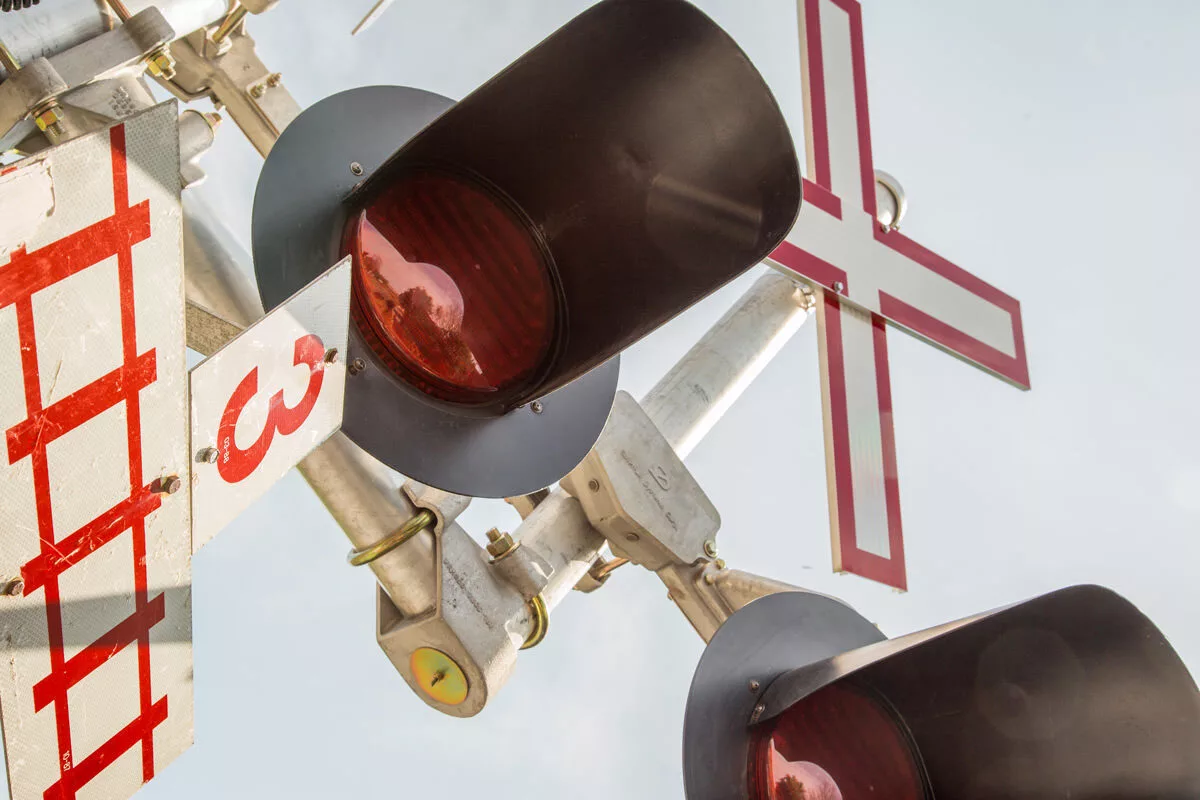
The 2000 Summary of Railway Accidents/Incidents, a Transportation Safety Board of Canada publication, highlighted the problem by indicating that 64 per cent of collisions at public crossings occurring that year took place at crossings equipped with warning devices such as lights and bells and in 33 per cent of these cases, it was the motor vehicle that hit the side of the train.
Investigation reports reveal that, in most circumstances, motorists are responsible for these collisions. They disregard the horn and bell warnings of approaching trains; they ignore light and bell warnings at crossings; and sometimes they even drive around lowered gates.
Trespassing on railway property also poses a significant safety risk to the trespasser, the railway and their community. Studies have shown that trespassing incidents occur when people take shortcuts by walking along, lying or sitting down or crossing the tracks. Incidents also occur when recreational vehicle users, cross-country skiers and hunters use the railway property as a recreational playground.
The findings of such surveys indicate that, despite the installation of gates, other warning devices, pedestrian crossovers and stricter trespassing enforcement, there is a lack of knowledge about the hazards that railways present. This communication gap is part of the problem and closing the gap is clearly a part of the solution. Operation Lifesaver Canada was established in 1981 to help address this problem.
By educating Canadians to the hazards surrounding railway property and promoting awareness through vigilance, the number of collisions and incidents has reduced significantly.